France’s largest basilica
Why the question is tricky
“Largest” can mean three different things: floor area, vault height, or the number of people the building can hold. Depending on the criterion, the answer changes. By capacity, the underground Basilique Saint-Pie-X in Lourdes wins by a large margin: it is designed for pilgrimage crowds. Among churches built upwards and visible from afar, lists often mention Notre-Dame de Fourvière or Saint-Martin de Tours.
And the title of basilica?
It has nothing to do with size. “Basilica” is an honorary distinction granted by the Pope to a sanctuary, for its age or role; a small church can have it, a large one may not. Saint-Denis received this title in 1966, the year it also became the cathedral of the new diocese. The full explanation is on basilica or cathedral.
The record that Saint-Denis truly holds
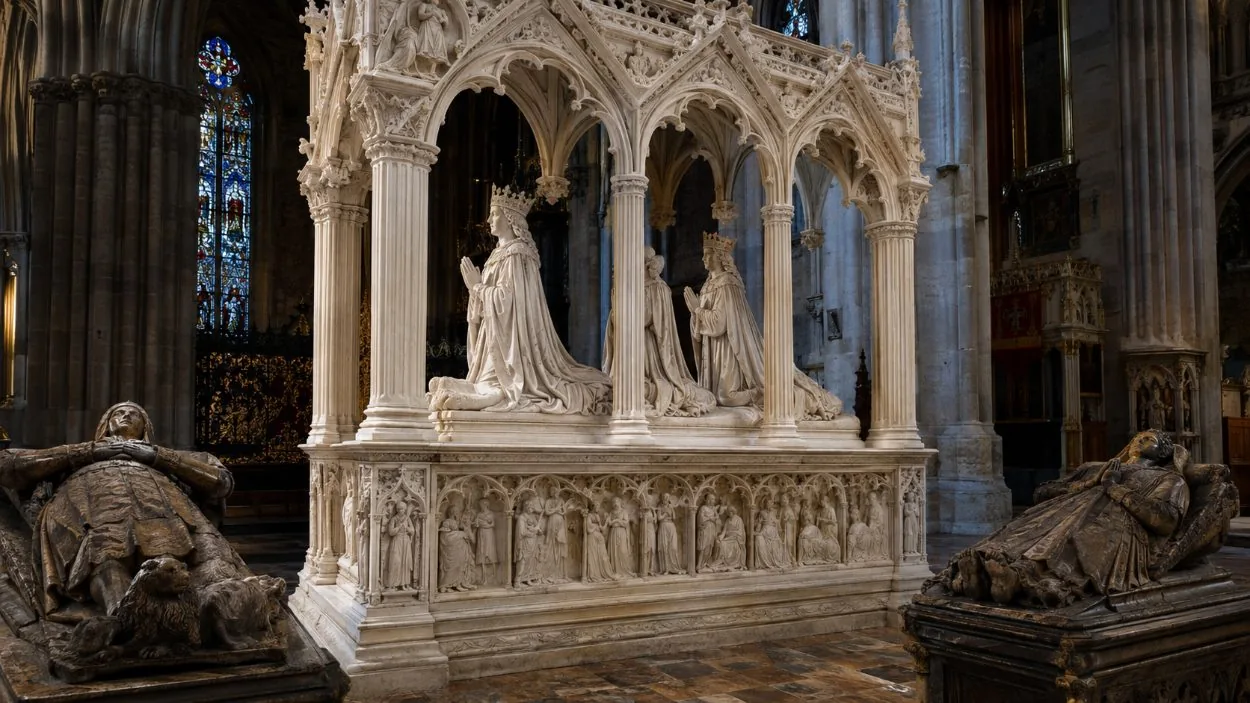
Over 70 gisants and tombs: this is the world’s largest collection of funerary sculpture from the 12th to the 16th century. Buried here are 40 kings, 26 queens, 60 princes and princesses, and around ten servants of the monarchy, from Dagobert in 639 to Louis XVIII in 1824. No other church in France brings together such a gathering. See who is buried here and the gisants.
Key points to remember before your visit
You don’t come here for the scale, but for the density. The building doesn’t overwhelm: it is tall, bright, and filled with carved stone. Allow one hour for a self-guided visit, and an hour and a half with the included guided tour in French. See how much time to allow and is it worth the detour.
If you’re looking for a record, count the gisants instead: over 70, more than in any other church in the world.
Frequently asked questions
Is Saint-Denis the largest basilica in France ?
No. In terms of capacity, it is Saint-Pie-X in Lourdes. Saint-Denis is the largest royal necropolis: see who is buried here.
Why is Saint-Denis called a basilica ?
Because the Pope granted it this honorary title in 1966 ; it is also a cathedral. See basilica or cathedral.
How many tombs does the necropolis contain ?
Over 70 recumbent statues and tombs, from the 12th to the 16th century. The details are on the recumbent statues page.